Why Fiber Cement Siding’s Durability Matters for Your Home
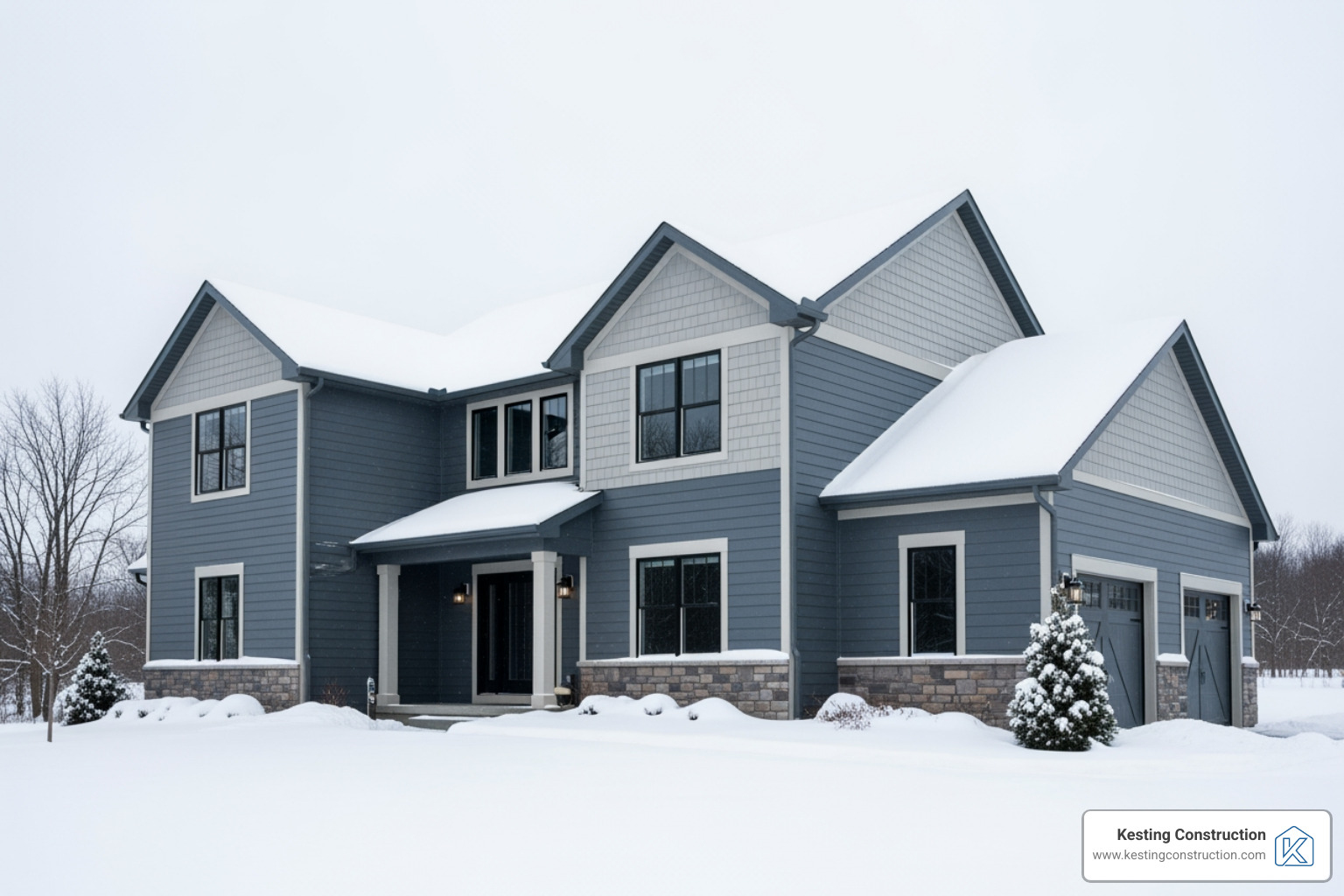
Fiber cement siding’s durability is what sets this material apart from every other exterior cladding option on the market. If you’re standing in front of your Pennsylvania home wondering whether your siding can handle another brutal winter, you’re asking the right question.
Quick Answer: How Long Does Fiber Cement Siding Last?
- Lifespan: 50+ years with proper installation and maintenance
- Warranty: 30-50 years from manufacturers like James Hardie
- Comparison: Outlasts vinyl (20-30 years) and wood (20-40 years) by decades
- Maintenance: Minimal—cleaning once or twice yearly, repainting every 10-15 years
- Weather Resistance: Withstands fire, moisture, pests, extreme temperatures, and severe storms
- ROI: Up to 78% return on investment
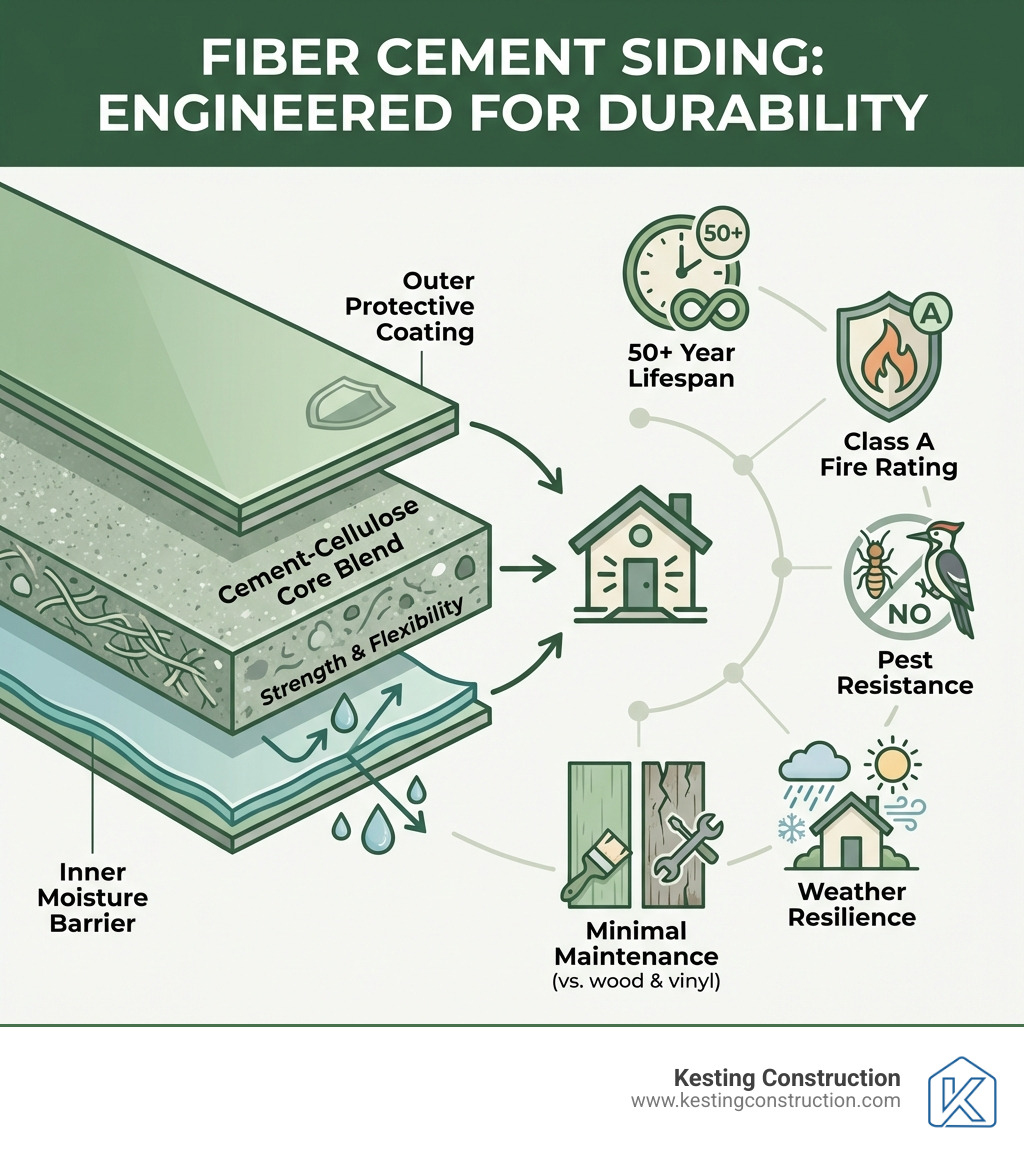
Here’s the thing about fiber cement: it’s not just durable. It’s engineered to be durable. Made from Portland cement, sand, cellulose fibers, and water, this material combines the strength of concrete with enough flexibility to resist cracking. It won’t burn. It won’t rot. Termites won’t touch it. And woodpeckers? They’ll move on to someone else’s house.
The research backs this up. High-quality fiber cement siding can last over 60 years when properly maintained. That’s not marketing hype—that’s what happens when you build something right.
For Pennsylvania homeowners dealing with freeze-thaw cycles, summer storms, and everything in between, fiber cement delivers. It’s one of those rare products where the upfront investment pays off year after year, decade after decade.
What is Fiber Cement Siding and How is it Made?
To understand why fiber cement siding’s durability is so legendary, we have to look at what’s inside the board. Think of fiber cement as a high-tech “recipe” designed to survive the apocalypse—or at least a very bad storm in Doylestown.
The primary ingredients are:
- Portland Cement: This is the binder. It’s the same stuff used in concrete sidewalks and skyscrapers. It provides the rigid strength and fire resistance that makes the material so tough.
- Cellulose Fibers: These are essentially wood pulp fibers. They act like the “rebar” in concrete, providing internal reinforcement and flexibility so the boards don’t snap like a dry cracker.
- Sand (Silica): This acts as a filler and helps the material resist shrinking and swelling as temperatures change.
- Water: Used to create the slurry before the boards are formed and cured.
The manufacturing process is a marvel of modern engineering. These ingredients are mixed into a slurry, pressed into sheets (often with a wood-grain texture embossed on the surface), and then “autoclaved.” An autoclave is essentially a giant pressure cooker that uses high-pressure steam to cure the material. This chemical reaction creates a dimensionally stable product that won’t warp or rot.
Because of this intense process, fiber cement products must meet strict industry standards for strength, water absorption, and fire resistance, ensuring that every board we install on your home is up to the task.
The Evolution of Hardie Board
While “fiber cement” is the technical name, many of our neighbors in Montgomery County simply call it “Hardie Board.” That’s because James Hardie was the pioneer that brought this material to the mainstream in the early 1990s.
Before James Hardie’s innovations, siding options were mostly limited to wood (which rots), vinyl (which melts and cracks), or aluminum (which dents). James Hardie changed the game by adding proprietary additives to the fiber cement mix, enhancing its performance across different climates. At Kesting Construction, we’ve seen how these boards have evolved from simple utility products into high-design architectural elements that can mimic everything from cedar shingles to smooth contemporary panels. You can explore James Hardie options to see just how far the aesthetics have come.
Sustainable Composition
In an era where we’re all trying to be a bit greener, fiber cement is a breath of fresh air. Unlike vinyl, which is a petroleum-based plastic, fiber cement is made from sustainable, earth-friendly materials.
Many manufacturers incorporate recycled content, such as post-consumer pulp fibers or fly ash (a byproduct of coal power plants). Because the material is so long-lasting, it stays out of landfills for 50 to 100 years. Furthermore, fiber cement is low in Volatile Organic Compounds (VOCs), meaning it won’t off-gas harmful chemicals into the air around your Schwenksville or Harleysville home. When you choose fiber cement, you’re investing in a product that’s durable for your home and kinder to the planet.
The Science Behind Fiber Cement Siding Durability
Why do we call it the “superhero” of siding? Because it has “powers” that other materials simply can’t match.
First, let’s talk about fire. Fiber cement has a Class A fire rating. It is non-combustible. In a fire demonstration, fiber cement will not ignite when exposed to direct flame, nor will it contribute fuel to a fire. This is a massive safety benefit compared to vinyl, which can melt away in seconds, or wood, which effectively acts as kindling.
Then there are the “critters.” If you’ve ever dealt with termites or carpenter ants, you know the nightmare of wood siding. Fiber cement holds zero appeal for pests. It’s basically a rock—bugs can’t eat it, and they can’t nest in it. Even woodpeckers, the bane of many Pottstown homeowners, find fiber cement too dense and hard to peck through. They quickly realize there’s no “free buffet” of insects inside and move on to the neighbor’s wood-sided house.
To see how fiber cement siding’s durability stacks up against the competition, check out this lifespan comparison:
| Siding Material | Typical Lifespan | Primary Weakness |
|---|---|---|
| Fiber Cement | 50 – 100 Years | Initial Cost / Weight |
| Vinyl | 20 – 30 Years | Melting, Cracking, Fading |
| Wood | 20 – 40 Years | Rot, Termites, Fire Risk |
| Aluminum | 30 – 50 Years | Denting, Scratches, Noise |
| Brick | 100+ Years | Mortar Maintenance, Cost |
Fiber cement is specifically engineered to resist the very things that kill other siding: moisture, UV exposure, and temperature fluctuations.
Impact and Weather Resistance
Living in Pennsylvania means your home’s exterior has to be a jack-of-all-trades. One day it’s 95 degrees with high humidity in Yardley, and the next, a thunderstorm is pelting your walls with hail.
Fiber cement is incredibly “impact resistant.” While a stray baseball or a heavy hailstone might crack vinyl or leave a permanent dent in aluminum, fiber cement stands its ground. It’s also heavy—about five times heavier than vinyl. This weight is an advantage during high-wind events or hurricanes, as it’s much harder for the wind to get underneath the boards and rip them off the house.
Its UV stability is another major plus. Traditional paints on wood or vinyl tend to fade and chalk over time. Fiber cement, especially when paired with factory-applied finishes, resists the sun’s rays, keeping your home looking freshly painted for years. You can learn more about these specific protections on our fiber cement siding service page.
Moisture and Rot Prevention
Moisture is the #1 enemy of any home. Once water gets behind your siding, you’re looking at mold, mildew, and structural rot. Fiber cement is inherently moisture-resistant. Unlike wood, which acts like a sponge, fiber cement does not absorb water. This prevents “delamination”—a fancy word for the layers of the siding peeling apart.
However, the material is only half the battle. To ensure total moisture protection, you need a high-quality water-resistant barrier (house wrap) and expert flashing. This is why James Hardie siding installation in PA requires such precision; we ensure every joint is sealed and every window is flashed to keep the Pennsylvania dampness where it belongs—outside.
Maximizing Fiber Cement Siding Durability Through Maintenance
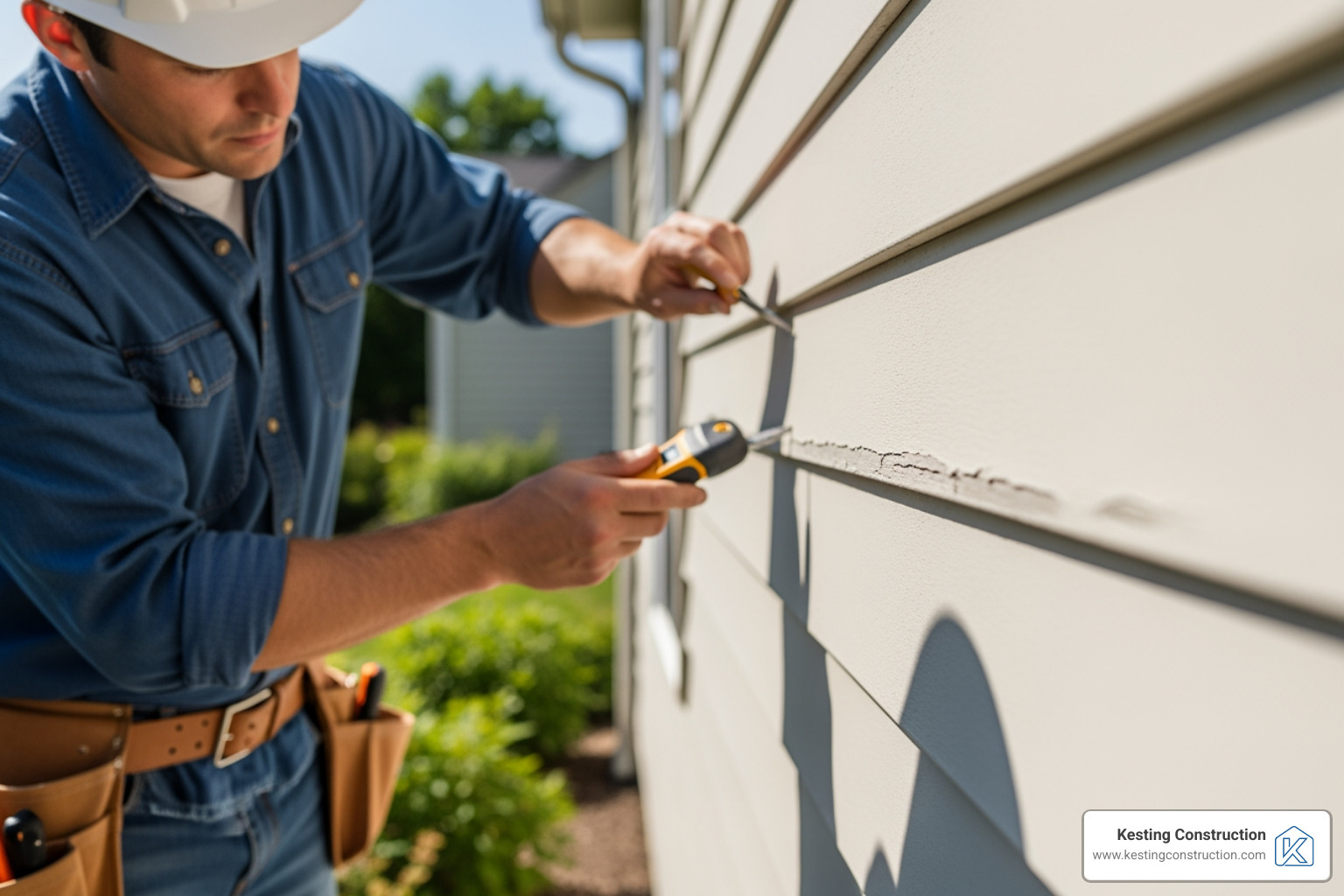
One of the biggest myths we hear in Hatfield and Jamison is that fiber cement is “zero maintenance.” While it’s low maintenance, nothing that sits outside in the elements for 50 years is truly “zero” maintenance. If you want to maximize your fiber cement siding durability, a little bit of love goes a long way.
We recommend an annual “check-up” for your home’s exterior. This isn’t complicated:
- Annual Cleaning: Use a garden hose and a soft-bristle brush to wash away dirt, dust, and spider webs. A mild detergent (like dish soap) is usually all you need.
- Avoid Pressure Washers: This is a big one! High-pressure water can damage the finish or even drive moisture into the joints. Keep it under 700 PSI if you must use a power washer, but a standard hose is safer.
- Inspect the Caulking: Over time, the sealant around windows and doors can shrink or crack. Touching up these small gaps every few years prevents water from sneaking in.
By following these simple steps, you ensure your James Hardie siding stays in peak condition for its entire 50-year-plus life expectancy.
How Climate Impacts Fiber Cement Siding Durability
Pennsylvania homeowners face a unique challenge: the “freeze-thaw cycle.” When water gets into a porous material and freezes, it expands, causing the material to crack. This is why our roads have so many potholes!
James Hardie solved this with the HardieZone System. They recognized that siding in Allentown needs to perform differently from siding in Arizona. For our region, we use HZ5 technology. This specific formulation of fiber cement is engineered for freezing temperatures, snow, and ice. It has superior paint adhesion and moisture resistance, specifically designed to handle the humidity and cold of the Northeast. It won’t crack in the winter or warp in the summer.
The Role of Professional Installation in Fiber Cement Siding Durability
We can’t stress this enough: a board of fiber cement is only as good as the person nailing it to the wall. Because fiber cement is heavy and can be brittle before it’s installed, it requires specialized tools and techniques.
As a James Hardie Elite Preferred Contractor, we follow strict manufacturer guidelines to ensure your warranty remains valid. This includes:
- Proper Fastening: Using corrosion-resistant ring-shank nails driven to the exact depth.
- Clearances: Maintaining the correct gap between the siding and roofs or decks to prevent “wicking” of moisture.
- Flashing and Sealing: Ensuring every penetration in the building envelope is watertight.
Long-Term Value and Warranty Protection
When you choose fiber cement, you aren’t just buying siding; you’re buying peace of mind. James Hardie offers a 30-year, non-prorated limited warranty on their siding products. “Non-prorated” is a big deal—it means the value of the warranty doesn’t drop as the siding gets older. If there’s a manufacturer defect in year 29, you’re covered just as well as in year one.
From a financial perspective, fiber cement is a powerhouse. It consistently ranks as one of the best home improvements for Return on Investment (ROI). According to industry data, homeowners can expect up to a 78% return on the cost of installation when they sell their home. Buyers in places like Trooper and Buckingham recognize the “Hardie” name and know it means they won’t have to worry about siding for a long, long time.
ColorPlus Technology vs. Field Painting
One of the coolest innovations in fiber cement siding durability is James Hardie’s ColorPlus® Technology. Instead of installing primed boards and painting them in your driveway (where dust and rain can ruin the finish), ColorPlus boards come from the factory with the color already baked on.
- UV Resistance: The finish is engineered to resist fading from the sun.
- Consistency: Multiple coats are applied in a controlled environment for a perfectly even finish.
- Warranty: The finish itself typically comes with a 15-year limited warranty against peeling, chipping, and cracking.
- Lifecycle: While field-painted siding might need a refresh every 5-8 years, ColorPlus often looks great for 15 years or more.
Structural Integrity Over Decades
Unlike vinyl siding, which can become brittle and rattle in the wind as it ages, fiber cement maintains its structural integrity. It is a rigid material that adds a layer of “heft” to your home’s walls.
While it is tough, it’s important to note that fiber cement is a cement-based product. If your home’s foundation shifts significantly (which can happen in some older PA homes), the siding may develop small cracks. However, unlike wood, these cracks won’t lead to rot, and they are easily repaired with a bit of exterior-grade caulk and touch-up paint. For the vast majority of homes, fiber cement remains a “buy once” product.
Frequently Asked Questions about Fiber Cement Siding
How long does fiber cement siding typically last?
With professional installation and basic maintenance, you can expect fiber cement siding to last 50 to 100 years. Most manufacturers provide a 30-year warranty, but the material itself is essentially as durable as the concrete in your foundation. It is one of the longest-lasting premium siding options available today.
Does fiber cement siding require painting?
Yes, eventually. If you choose primed siding and paint it on-site, you’ll likely need to repaint every 10-15 years. If you opt for James Hardie’s ColorPlus Technology, that timeline is significantly extended. When you do repaint, fiber cement holds paint exceptionally well because it doesn’t shrink and swell like wood, which is what usually causes paint to peel. Always use a high-quality 100% acrylic latex paint for the best results.
Is fiber cement siding waterproof?
Fiber cement is highly moisture-resistant, but it is not technically “waterproof” in the sense that it could be submerged. However, when installed with a proper drainage plane (house wrap) and the right flashing, it is the best defense against rain, snow, and humidity. To protect the edges, we often recommend James Hardie trim and soffit installation, which ensures that even the “corners” of your home are protected by the same durable material.
Conclusion
At Kesting Construction, we’ve spent years seeing how different materials hold up against the Pennsylvania elements. From the historic streets of Doylestown to the new developments in Montgomery County, one thing remains constant: fiber cement siding durability is the gold standard.
Choosing fiber cement means you’re choosing a home exterior that is fire-resistant, pest-proof, and built to last for half a century or more. It’s an investment that pays you back in curb appeal, reduced maintenance, and superior resale value.
If you’re ready to “superhero-proof” your home with the best material on the market, we’re here to help. Our status as a James Hardie Elite Preferred Contractor means you get the best craftsmanship to match the world’s best siding. Protect your home with fiber cement siding today and rest easy knowing your exterior is ready for anything.