Why Pennsylvania Homeowners Are Asking About Installing Siding Over Stucco
The cost to install siding over stucco typically runs 5-10% more than standard siding installation, averaging around $12,000 for a 2,000 sq ft home—but that’s still far less expensive than the $2,000+ you’d spend removing stucco first. Here’s what you need to know:
Quick Cost Comparison:
- Standard siding installation: ~$10,500 average
- Siding over stucco: ~$12,000 average (includes prep work)
- Stucco removal alone: $2,000-$7,000+
- Additional prep costs: 5-10% premium for furring strips, moisture barriers, and labor
If you’re a Pennsylvania homeowner staring at aging, cracked stucco on your home’s exterior, you’re probably wondering if there’s a way to update your home’s look without the hassle and expense of tearing everything down to the studs.
The good news? Installing new siding directly over your existing stucco is often possible—and it can save you thousands compared to full stucco removal.
The catch? It’s not always the right solution, and it absolutely requires professional installation to avoid serious problems down the road. Trapped moisture between your old stucco and new siding can lead to mold growth, wood rot, and structural damage that will cost far more to fix than doing the job right the first time.
Before you make a decision, you need to understand:
- Whether your existing stucco is in good enough condition
- The true cost difference between siding over stucco versus removal
- Which siding materials work best for this application
- Why proper moisture management is absolutely critical
- How wall thickness changes will affect your windows and doors
As a James Hardie Elite Preferred Contractor serving Pennsylvania homeowners, we’ve helped countless families steer this exact decision. This guide will walk you through everything you need to know to make the right choice for your home and budget.
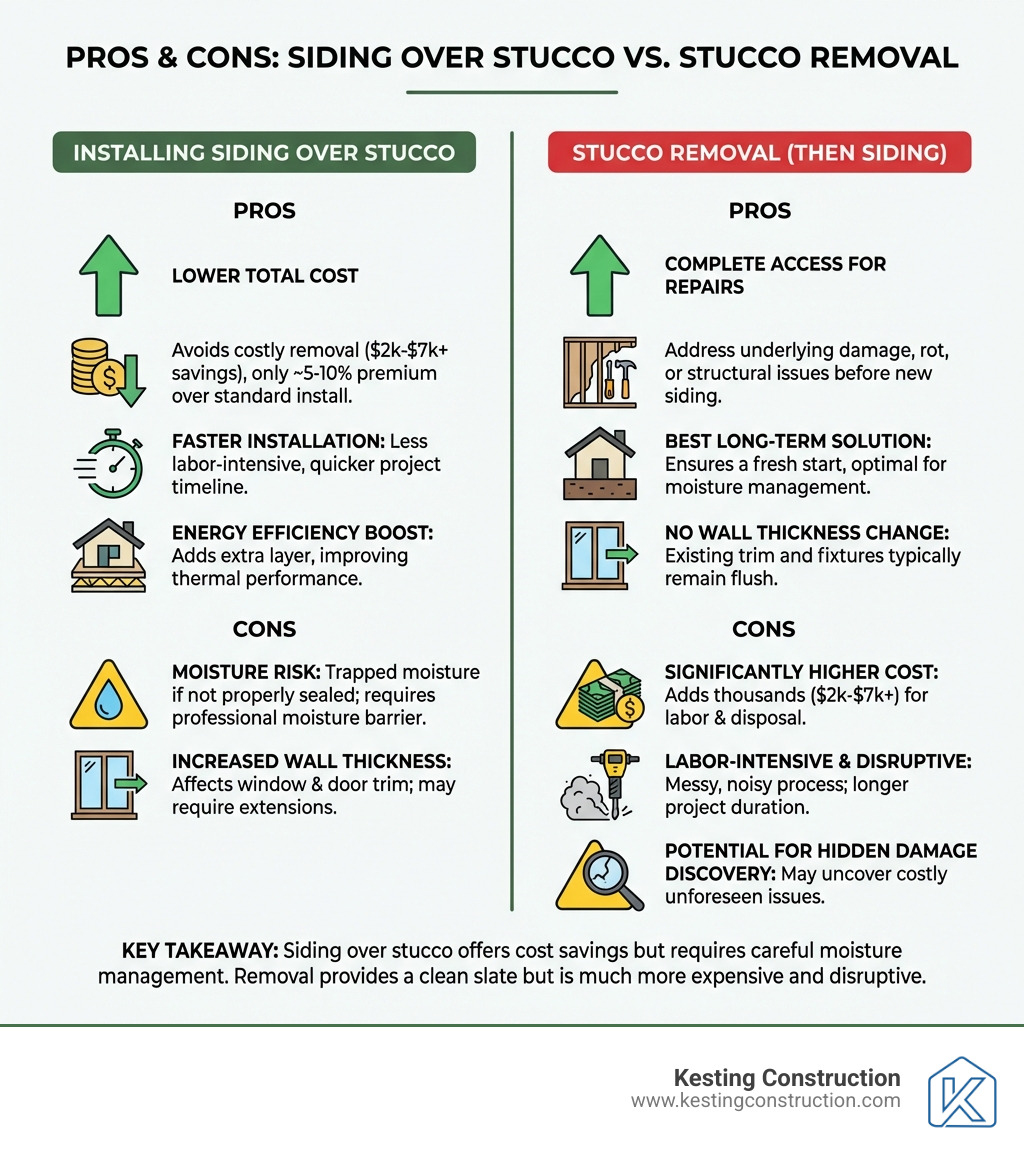
Siding Over Stucco: Is It a Good Idea?
The short answer is: yes, it can be a fantastic idea, but with a few very important caveats. Many homeowners in Harleysville, Yardley, Jamison, and other Pennsylvania communities are looking for ways to refresh their home’s exterior, and installing siding over stucco offers a compelling blend of aesthetic upgrade and cost savings.
We understand the appeal: no longer loving the look of that old stucco, but not keen on spending thousands to remove it before residing. The possibility of installing new siding directly over your existing stucco means you can bypass the messy, time-consuming, and expensive process of stucco removal, which can average $2,000 or more, and sometimes much higher depending on the size of your home and the complexity of the job. This alone makes the cost to install siding over stucco often more affordable than a full tear-off and replacement.
However, this isn’t a “set it and forget it” solution. While it’s certainly possible, and often more cost-effective, it’s only a good idea if the stucco is in good condition and isn’t leaking. The biggest potential risk lies in trapping moisture. Stucco, by nature, can absorb water and, if not properly installed or maintained, can develop cracks and leaks. Covering problematic stucco can lead to hidden structural damage, mold growth, and compromised insulation, turning a seemingly smart decision into a costly nightmare. That’s why a thorough professional assessment of your existing stucco is the absolute first step.
Key Considerations Before You Begin
Before we even think about nails and new panels, a critical evaluation of your existing stucco is paramount. Think of it like a medical check-up for your home’s exterior.
- Stucco Assessment: A professional from Kesting Construction will conduct a meticulous inspection of your stucco. We’re looking for signs of significant cracking, crumbling, or any areas where the stucco is detaching from the wall. Minor, superficial cracks can often be repaired, but widespread damage indicates underlying issues that need to be addressed.
- Moisture Inspection: This is perhaps the most crucial step. We’ll check for any existing leaks, water stains, or signs of moisture intrusion. Stucco that is actively leaking or has a history of significant moisture problems cannot simply be covered. Trapping moisture is a recipe for disaster, as it can accelerate wood rot, mold growth, and compromise your home’s structural integrity.
- Structural Integrity: The existing stucco needs to be structurally sound and firmly attached to the building. If the stucco is loose or compromised, it won’t provide a stable base for new siding.
- Wall Thickness Increase: Adding new siding and furring strips over existing stucco will inevitably increase the overall thickness of your exterior walls. This might sound minor, but it has significant implications, especially around windows and doors.
- Window and Door Appearance: With increased wall thickness, your existing windows and doors might appear recessed into the wall. This isn’t just an aesthetic concern; it can also create new pathways for water intrusion if not properly addressed. We’ll discuss how we can adjust and trim these openings to ensure a clean, professional finish and maintain proper weatherproofing.
Our team at Kesting Construction specializes in ensuring that your siding services project is built on a solid foundation, both literally and figuratively.
The Dangers of Trapped Moisture
Let’s be clear: the biggest risk when installing siding over stucco, or any existing exterior, is improper moisture management. Ignoring this step can lead to severe and costly consequences for your home.
When moisture gets trapped between your old stucco and the new siding, it creates a dark, damp environment—the perfect breeding ground for mold. Mold not only poses health risks to your family but can also cause significant damage to your home’s structure. Beyond mold, trapped moisture can lead to:
- Wood Rot: The wooden sheathing and framing behind your stucco are vulnerable to rot when exposed to persistent moisture. This can compromise the structural integrity of your home, leading to expensive repairs.
- Structural Damage: As wood rots, it loses its strength, potentially leading to sagging walls, weakened floors, and even roof issues.
- Compromised Insulation: Wet insulation loses its effectiveness, leading to higher energy bills and a less comfortable home.
- Pest Infestation: Damp, rotting wood is an open invitation for pests like termites and carpenter ants, adding another layer of headache and expense.
To prevent these issues, professionals install a rainscreen system. This involves creating a small air gap between the old stucco (or house wrap) and the new siding, allowing any moisture that penetrates the outer layer to drain away and evaporate. This is a crucial detail that separates a professional, long-lasting installation from a problematic one. Proper drainage is key to protecting your investment and ensuring your home remains healthy and sound. Choosing energy-efficient siding options is also important for overall home health.
The Installation Process: From Stucco to Siding
Once we’ve determined that your existing stucco is a suitable candidate for an overlay, the actual installation process begins. This isn’t a job for the weekend warrior; it requires precision, expertise, and a deep understanding of moisture management.
Our professional process ensures that every step is taken to provide your Pennsylvania home with a durable, beautiful, and weather-resistant exterior. We emphasize proper technique at every stage, from initial prep to the final trim work, guaranteeing a seamless and long-lasting change.
Essential Preparation Work
The success of installing siding over stucco hinges almost entirely on the preparation. Skimping here is simply not an option.
- Professional Inspection: As mentioned, this is where it all starts. Our experts will thoroughly inspect your stucco for any signs of damage, leaks, or mold growth. If any minor issues are found, they must be repaired before proceeding.
- Cleaning the Surface: The stucco surface needs to be clean and free of dirt, debris, or loose particles to ensure proper adhesion of any subsequent layers.
- Installing Furring Strips: This is a defining step when installing siding over stucco. Furring strips (typically pressure-treated wood or composite) are installed vertically over the existing stucco, directly into your home’s wall studs. These strips serve several crucial purposes:
- They create a perfectly flat and plumb surface for the new siding, even if your stucco isn’t perfectly even.
- They create the essential air gap (rainscreen) between the stucco and the new siding, allowing for drainage and ventilation.
- They provide a solid nailing surface for the new siding.
- Creating a Rainscreen Gap: The furring strips naturally create this gap, which is vital for managing moisture. Any water that gets behind the new siding can then drain down and away from the wall, preventing it from getting trapped against the stucco or the underlying sheathing.
- House Wrap Installation: Before the furring strips, or sometimes after, a high-quality house wrap or weather-resistive barrier is installed over the stucco. This acts as an additional layer of protection against moisture, ensuring that your home is well-sealed.
Adjusting Windows, Doors, and Trim
One of the most noticeable impacts of installing siding over stucco is the increased wall thickness. This can make windows and doors appear “recessed,” affecting both aesthetics and functionality.
- Recessed Appearance: Without adjustments, your windows and doors will sit deeper within the new, thicker wall. This can look odd and create ledges where water and debris can accumulate.
- Trim Build-Outs: To counteract this, we expertly build out the window and door frames and trim. This involves adding new trim around the openings, bringing them flush or nearly flush with the new siding plane. This ensures a clean, finished look that complements your home’s new exterior.
- Proper Flashing Techniques: With any exterior renovation involving windows and doors, proper flashing is non-negotiable. We install new flashing systems around all openings to prevent water intrusion, directing it away from the building envelope. This is especially critical in Pennsylvania, where we experience a range of weather conditions, from heavy rain to snow.
- Weatherproofing Openings: Our attention to detail ensures that all openings are thoroughly weatherproofed, protecting your home from the elements and contributing to its energy efficiency. This might involve new caulking, sealants, and custom metalwork. For more detailed information on integrating new siding with your windows, explore our page on window siding replacement.
The Ultimate Guide to the Cost to Install Siding Over Stucco
Understanding the cost to install siding over stucco is crucial for any homeowner in Montgomery County, Pottstown, or Doylestown considering this project. While it typically offers savings compared to full stucco removal, several factors influence the final price.
The overall cost is a blend of labor, material choices, and the inherent complexity of your home’s design.
- Labor Costs: Installing siding over stucco is more labor-intensive than a standard siding installation. It requires specialized skills for the initial assessment, stucco repairs, precise installation of furring strips, and meticulous adjustments around windows and doors. Professionals will also set up proper drainage to avoid moisture build-up and mold growth between the materials.
- Material Costs: The type of siding you choose will be a significant cost driver. Options range from economical vinyl to premium James Hardie fiber cement. We’ll dig into specific material costs shortly.
- Project Complexity: Factors such as the size of your home, the number of windows and doors, architectural details, and the overall condition of your existing stucco will all impact the project’s complexity and, consequently, its cost. Taller homes or those with intricate designs will naturally require more labor and materials.
Cost Breakdown: Siding Over Stucco vs. Stucco Removal
Let’s look at the numbers. The average cost to replace siding on a home is around $10,500. When installing siding over stucco, you should expect to pay an average of $12,000. This additional cost covers the specialized assessment, any necessary repairs to the stucco, and the materials and labor required for installing furring strips and adjusting openings.
The great news is, even with this 5-10% premium for the required prep work, installing siding over stucco is often more affordable than tearing off the stucco and starting fresh. Stucco removal alone can cost anywhere from $2,000 to $7,000 or more, depending on the scope of the project.
Here’s a simplified comparison:
| Project Type | Estimated Average Cost (2,000 sq ft home) | Key Components |
|---|---|---|
| Siding Over Stucco | $12,000 | Stucco assessment & minor repairs, furring strips, rainscreen system, new siding materials, installation labor, window/door adjustments. |
| Stucco Removal + New Siding | $12,500 – $17,500+ | Stucco removal & disposal ($2,000-$7,000+), standard new siding materials, installation labor. |
Note: These are average estimates. Actual costs can vary based on location, material choice, and specific project details. For a precise estimate for your Pennsylvania home, contact us directly.
This comparison clearly shows the potential savings by opting to install siding over stucco, provided your existing stucco is in good condition. For more insights on general siding replacement costs, check out our guide.
Average Cost to Install Siding Over Stucco by Material
The material you choose for your new siding will significantly impact the total cost to install siding over stucco. Here’s a general overview of average installed costs per square foot, keeping in mind the additional prep work required for an over-stucco installation:
- James Hardie Siding (Fiber Cement): Expect to pay approximately $5–$14 per square foot installed. As a James Hardie Elite Preferred Contractor, we often recommend this material for its superior durability and aesthetic appeal, especially for Pennsylvania homes.
- Vinyl Siding: This is generally the most budget-friendly option, ranging from $3–$12 per square foot installed. Vinyl is a popular choice due to its versatility and relatively low maintenance.
- Engineered Wood Siding: A good mid-range option, engineered wood typically costs $1–$6 per square foot installed. It offers the look of natural wood with improved durability.
These costs include both materials and labor for installation, but the specific “over stucco” preparation will add a percentage to these baseline figures. For a comprehensive breakdown of costs by material, size, and add-ons, our detailed article on siding replacement cost: by material, size & add-ons offers further insights.
Choosing the Best Siding to Install Over Stucco
When you’re deciding on new siding for your home in Trooper, Buckingham, or Allentown, especially when installing over stucco, material selection is critical. We consider durability, aesthetics, and long-term value to ensure your investment pays off for years to come.
Why Fiber Cement Siding is the Top Choice
From our experience, and backed by industry insights, fiber cement siding stands out as the best material for installation over stucco. Here’s why we, as a James Hardie Elite Preferred Contractor, often recommend it:
- Rigidity Over Furring Strips: Unlike some other materials, fiber cement siding is incredibly rigid. This means it lays perfectly flat and won’t warp or buckle over time, even when installed over furring strips. This rigidity ensures a consistently smooth and attractive finish.
- Durability: Fiber cement is engineered to withstand the elements, offering exceptional resistance to cracking, rotting, and swelling. It holds up beautifully against Pennsylvania’s diverse weather conditions.
- Fire Resistance: Fiber cement is non-combustible, providing an added layer of safety for your home.
- Pest Resistance: Insects like termites and carpenter ants are no match for fiber cement, protecting your home from costly pest damage.
- Low Maintenance: While not entirely maintenance-free, fiber cement requires significantly less upkeep than many other siding materials, often only needing an annual cleaning. Its baked-on ColorPlus® Technology finishes are engineered to last longer than traditional paint, maintaining vibrant color for years.
When considering James Hardie siding vs vinyl siding, fiber cement often wins for this specific application due to its stability and long-term performance.
Other Suitable Siding Materials
While fiber cement is our top recommendation for installing over stucco, other materials can also be suitable, depending on your budget and desired aesthetic.
- Vinyl Siding: Vinyl is a popular choice for its affordability and wide range of colors and styles. It’s relatively lightweight and easy to install.
- Pros: Cost-effective, low maintenance, good range of colors and styles.
- Cons: Can be prone to warping or expansion/contraction with temperature changes, which might be more noticeable when installed over furring strips. Less rigid than fiber cement.
- Engineered Wood Siding: This material offers the classic look of wood with improved durability. It’s treated to resist moisture, pests, and rot, making it a robust alternative.
- Pros: Aesthetically pleasing, good durability, often pre-primed or pre-finished.
- Cons: Can be more expensive than vinyl, and still requires some maintenance (like painting) over time.
Each material has its own set of advantages and disadvantages. We encourage you to explore our comprehensive guide on siding materials pros and cons to help you make an informed decision for your home.
Frequently Asked Questions about Siding Over Stucco
How much more does it cost to put siding over stucco?
Expect to pay 5-10% more for preparation compared to a standard installation. However, this is often more affordable than the average $2,000+ cost of complete stucco removal and disposal.
Can I install siding over damaged stucco?
No. The existing stucco must be in good, sound condition. Minor cracks can be repaired, but widespread damage, water intrusion, or mold requires full removal before new siding can be installed.
Do I need a professional to install siding over stucco?
Yes, this is not a DIY project. A qualified professional is essential to properly assess the stucco, create a moisture-managing rainscreen, and install the furring strips and siding correctly to prevent costly future damage.
Conclusion: Transform Your Home with Confidence
Deciding on the best approach for your home’s exterior—whether it’s a full stucco removal or the more cost-effective option of installing siding over existing stucco—is a significant decision. We’ve explored that while the cost to install siding over stucco typically involves a 5-10% premium for specialized preparation, it often presents a more budget-friendly and less disruptive path than completely tearing down your old stucco.
The key takeaways are clear:
- Installing siding over stucco is a viable and often cost-saving solution for many Pennsylvania homeowners.
- Proper assessment of your existing stucco’s condition and meticulous preparation, including furring strips and a rainscreen system, are absolutely critical to prevent moisture issues.
- Adjustments to windows, doors, and trim are necessary to maintain aesthetics and weatherproofing.
- Materials like fiber cement siding offer superior rigidity and durability, making them ideal for this application.
At Kesting Construction, we pride ourselves on exceptional craftsmanship, guaranteed quality, and superior customer service. As a James Hardie Elite Preferred Contractor serving communities like Harleysville, Yardley, Jamison, Trooper, Buckingham, Schwenksville, Montgomery County, Pottstown, Hatfield, and Doylestown, we ensure expert installation that provides long-lasting protection and stunning curb appeal for your home.
Don’t let outdated stucco hold back your home’s potential. Let us help you transform your home with confidence. Explore siding options and contact us for a professional consultation today.